A Monument of Three Civilisations
Few buildings in the world have lived as many lives as Hagia Sophia. Built as a Christian cathedral in 537 AD by Emperor Justinian I, it was the largest church in the world for nearly a thousand years. When the Ottomans conquered Constantinople in 1453, Sultan Mehmed II converted it into a mosque. In 1934, Atatürk transformed it into a museum — and in 2020, it became a mosque again. Today it is open to all visitors free of charge, regardless of faith.
What to See Inside
The Great Dome
At 55.6 metres high and 31.87 metres in diameter, the dome appears to float on a ring of 40 windows that flood the space with light. Byzantine architect Anthemius of Tralles designed it with a shallow profile that creates the optical illusion of weightlessness. Justinian reportedly cried "Solomon, I have surpassed thee!" upon seeing it completed.
Byzantine Mosaics
During the Ottoman period many mosaics were plastered over, but some have been uncovered. The most significant: the Deësis mosaic on the upper gallery (9th century), considered one of the finest works of Byzantine art, depicting Christ flanked by the Virgin Mary and John the Baptist. Also notable: the Empress Zoe mosaic and the mosaic of Virgin with Child in the apse.
Upper Gallery
Climb to the upper gallery for elevated views of the main floor and the best access to surviving mosaics. The gallery was traditionally reserved for the empress and her retinue.
Ottoman Additions
Four minarets were added at different times. Inside, look for the Sultan's loge, eight enormous medallions bearing the names of Allah, Prophet Muhammad, and the first four Caliphs, and the marble minbar (pulpit) added by Murat III.
Practical Information
- Opening hours: Open daily. During prayer times (five times a day) the mosque is closed to tourists for 90 minutes — check the prayer schedule before you go.
- Entry: Free for all visitors.
- Dress code: Shoulders and knees must be covered. Women must cover their hair. Free scarves and coverings are available at the entrance.
- Shoes: Remove shoes before entering the prayer area. Plastic bags are provided.
- Best time to visit: First thing in the morning (9–10 AM) or late afternoon (4–5 PM) to avoid the largest crowds.
- Photography: Permitted throughout, including the upper gallery.
History Timeline
- 532 AD: Construction begins after Nika riots destroy earlier church on the site.
- 537 AD: Hagia Sophia consecrated as Greek Orthodox Cathedral of Constantinople.
- 1204: Latin crusaders convert it to a Roman Catholic cathedral.
- 1261: Returned to Eastern Orthodox Christianity.
- 1453: Ottomans convert it to a mosque.
- 1934: Atatürk converts it to a museum.
- 2020: Reconverted to a mosque; remains open to all visitors.
Combining with Nearby Attractions
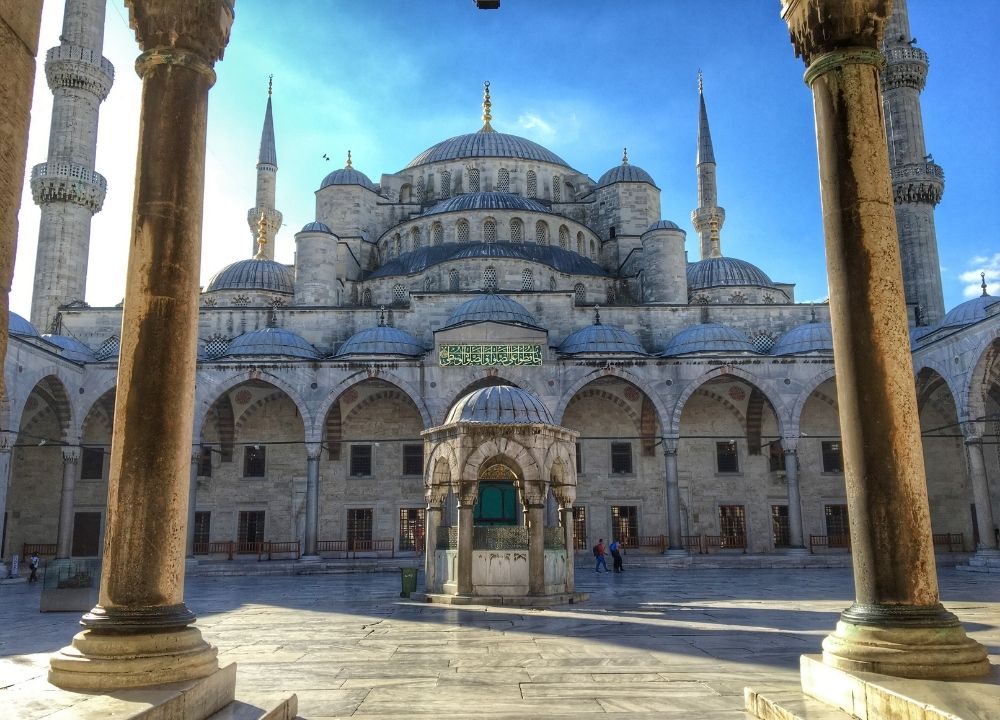
Hagia Sophia sits in Sultanahmet Square, steps from the Blue Mosque, Topkapi Palace, and the Basilica Cistern. Plan to spend a full day in this district. For context that makes every detail come alive, consider a guided tour with an expert who knows the stories behind the stones.